This Is What Happens When Cape Town’s Wild Terrain Grabs Hold of You
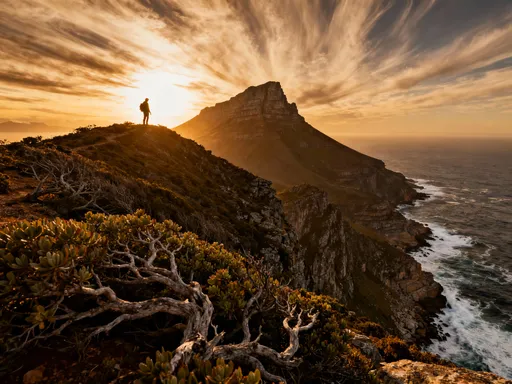
You know that feeling when a place doesn’t just impress you—but rewires you? Cape Town did that to me. It’s not just the postcard views; it’s the raw, untamed land itself—the jagged peaks, the ocean-hewn cliffs, the desert-like slopes clinging to life. This city isn’t built on terrain. It’s born from it. And once you walk its wild edges, feel the wind scream off the Atlantic, or stand beneath Table Mountain’s sheer face, you’ll understand: Cape Town doesn’t play nice. It stuns.
Arrival: First Contact with the Edge
The first time you approach Cape Town, whether by air or by road, the city announces itself not with skyscrapers or sprawl, but with geology. From the window of a descending plane, the landscape unfolds like a sculptor’s masterpiece—Table Mountain rises abruptly from the coastal plain, flanked by the fin-like spines of Devil’s Peak and Lion’s Head. To the south, the Cape Peninsula stretches like a finger pointing into the Atlantic, its coastline carved by millennia of wind and wave. There is no gentle introduction. The terrain demands attention, asserting its dominance before you’ve even stepped off the tarmac.
For those arriving by car, the journey along Chapman’s Peak Drive offers one of the most dramatic entrances in the world. The narrow, serpentine road clings to a cliffside that plunges directly into the churning ocean below. On one side, sheer rock faces bear the scars of ancient tectonic shifts; on the other, the Atlantic stretches endlessly, its surface broken only by the occasional breaching whale or diving gannet. The light here is different—crisp and luminous, as if filtered through salt and time. You feel small, not in a disheartening way, but with a sense of awe that borders on reverence.
Even the flatter approaches, like the Cape Flats, speak of the region’s geological intensity. This broad, sandy plain was once a shallow seabed, gradually uplifted and shaped by wind and water. Today, it hosts much of the city’s residential and agricultural activity, yet it remains ecologically fragile. The contrast between the urban development and the raw, open landscape is striking. Unlike other coastal cities where nature has been tamed or buried beneath concrete, Cape Town exists in constant negotiation with its environment. The mountains are not backdrop—they are participants. The wind is not weather—it is a presence. From the moment you arrive, the land tells you: this place has its own rules.
Table Mountain: More Than a Postcard
Table Mountain is more than an icon; it is a geological titan. Its flat summit, often draped in the famous “tablecloth” of cloud, rises 1,085 meters above sea level and has stood as a sentinel over the Cape for over 300 million years. While most visitors ascend via the rotating cable car for panoramic views, those who choose to hike experience the mountain in a far more intimate way. The Platteklip Gorge route, the most direct path, is a grueling but rewarding climb—over 1,000 stone steps cut into the rock, gaining elevation steadily through exposed sandstone and sparse vegetation. It’s not a trail for the faint-hearted, but the rhythm of footfall on stone, the warmth of sun on rock, and the increasing vastness of the view with every turn make it a pilgrimage of sorts.
For the more adventurous, the India Venster route offers a steeper, rock-scrambling alternative. This path winds along narrow ledges and requires hands as much as feet, delivering a visceral sense of exposure and height. The payoff is the same: a sweeping arrival onto the plateau, where the world suddenly flattens and expands in every direction. But what many don’t realize is that Table Mountain is not a monolith—it is an ecosystem in layers. As you climb, microclimates shift subtly. The lower slopes, baked by sun and scoured by wind, host drought-resistant succulents and low shrubs. Higher up, moisture trapped by the cliffs nourishes patches of ferns and mosses, creating pockets of green in an otherwise austere landscape.
The true wonder, however, lies in the fynbos—a unique vegetation type found almost exclusively in the Western Cape. This fine-leaved shrubland is one of the most biodiverse regions on Earth, with more plant species in the Cape Floristic Region than in the entire United Kingdom. Proteas, ericas, and restios thrive in the nutrient-poor soil, adapted over millennia to fire, wind, and seasonal drought. Hikers may not notice the scientific significance at first, but they feel it—the air carries a herbal scent, the colors are unexpectedly vivid, and the silence is deep, broken only by the rustle of a sunbird flitting between blooms.
Safety is paramount. Weather on Table Mountain can change in minutes. A clear morning can give way to gale-force winds and zero visibility by afternoon. Hikers are advised to start early, carry extra layers, and check conditions with park authorities before setting out. The mountain does not forgive unpreparedness. But for those who respect its moods, it offers one of the most profound natural experiences in Africa—a place where earth, sky, and solitude converge.
The Cape Peninsula: Where Land Meets Fury
Extending southward from Cape Town like a spine of rock and wind, the Cape Peninsula is where the Atlantic and Indian Oceans are said to meet—a poetic notion, though scientifically, it is the cold Benguela Current from the north and the warm Agulhas Current from the south that converge near Cape Agulhas, further east. Still, the Cape of Good Hope and Cape Point, located at the peninsula’s tip, mark a true boundary: between temperate and subtropical zones, between sheltered bays and open ocean, between human habitation and wild reserve.
The terrain here is unforgiving. Windswept heathlands dominate, where low fynbos clings to sandy soil, shaped by relentless south-easterly gales. Cliffs drop sharply into the sea, their bases pounded by swells that roll in unimpeded from the Southern Ocean. At Cape Point, the lighthouse stands sentinel on a promontory where the ocean stretches in two directions—west to the Atlantic, east to False Bay. On stormy days, waves explode against the rocks with a force that can be felt through the ground. This is not a place for casual strolls. It is a landscape of elemental power.
Yet it is also one of extraordinary beauty. The shift in vegetation from the western to eastern coasts is subtle but distinct. On the Atlantic side, facing the colder waters and stronger winds, the plant life is hardier, more compact. On the False Bay side, sheltered and sun-drenched, the slopes are greener, with denser thickets and even patches of milkwood forest. Birdlife thrives—Cape sugarbirds, rock jumpers, and the elusive Cape siskin flit through the brush. Along the coast, African penguins waddle across rocky outcrops at Boulders Beach, a rare and heartening sight in an otherwise severe environment.
Navigating the peninsula requires planning. The roads are narrow, winding, and often shared with cyclists and slow-moving tour vehicles. The most scenic drives—Chapman’s Peak, Suikerbossie, and the road to Cape Point—are best taken in daylight with clear weather. Sunrise at Cape Point offers a moment of rare stillness: the sky blushing pink, the ocean calm before the winds pick up, the silhouette of the lighthouse sharp against the dawn. For those seeking drama, a storm-watching perch at Scarborough or Miller’s Point provides front-row seats to nature’s raw spectacle. But always with caution—this coastline does not tolerate carelessness.
Signal Hill to Lion’s Head: Urban Meets Wild
Within the city’s embrace, two smaller peaks offer immediate access to wild terrain without leaving the urban core. Signal Hill, a grassy ridge extending from Table Mountain toward the city center, is often overlooked but rich in history and views. Once used for time-ball signaling to ships in the harbor, it now serves as a quiet refuge for walkers and kite-fliers. The trail up from Kloof Nek is gentle, winding through patches of renosterveld—a shrubland once widespread on the Cape Flats but now critically endangered. At the summit, 350 meters above sea level, the entire city unfolds: the harbor, the Victoria & Alfred Waterfront, the distant glint of Robben Island in the bay.
Just beyond, Lion’s Head rises like a crouching beast, its summit shaped by erosion into a pair of rocky knobs. At 669 meters, it is modest in height but immense in experience. The trail, a well-maintained path with chains for assistance on steeper sections, circles the peak, offering 360-degree views. On clear days, you can see from Table Mountain to Cape Point, from the Atlantic Seaboard to the inland suburbs. But the true magic happens on full-moon nights, when hundreds of locals gather to hike under silver light. The ascent becomes a communal ritual—friends chatting, drummers playing, couples pausing to watch the moon rise over the ocean. It is one of Cape Town’s most beloved traditions, a blend of nature, culture, and quiet celebration.
These urban peaks are more than scenic lookouts—they are vital green lungs and recreational sanctuaries. Unlike the more remote trails of the peninsula, they are accessible by foot, bicycle, or short drive from most city neighborhoods. They offer immediate immersion in nature, a chance to feel wind and rock without a long journey. Yet they still demand respect. The weather can turn quickly, and the descent in darkness requires flashlights and caution. But for residents and visitors alike, Signal Hill and Lion’s Head represent a rare gift: wildness within reach.
Kirstenbosch and the Cape Flats: Contrasts in Soil and Life
On the eastern slopes of Table Mountain, Kirstenbosch National Botanical Garden offers a curated encounter with the Cape’s extraordinary flora. Established in 1913, it is one of the first botanical gardens dedicated exclusively to indigenous plants. Its location is no accident—the slopes here are composed of ancient Table Mountain Sandstone, which weathers slowly and supports a thin, acidic soil ideal for fynbos. The result is a living museum of biodiversity, where over 7,000 plant species are displayed in natural groupings along meandering paths.
Visitors walk beneath towering proteas, through tunnels of restios, and alongside streams lined with ferns. The garden’s design respects the natural contours of the land, with terraces and boardwalks minimizing disruption. At certain times of year, the slopes explode in color—orange blooms of the pincushion, purple spikes of agapanthus, the delicate pink of the Cape heath. Birdlife is abundant: the orange-breasted sunbird darts between flowers, the martial eagle soars overhead. It is a place of calm and discovery, where the complexity of the Cape’s ecosystems becomes visible and tangible.
In stark contrast lies the Cape Flats, the vast, flat expanse southeast of the city center. Once a mosaic of wetlands, dunes, and sand plains, it has been heavily transformed by urbanization. Yet beneath the surface, it remains ecologically significant. The sandy soil, derived from ancient coastal deposits, hosts unique vegetation types like Cape Flats Sand Fynbos—now critically endangered due to agriculture and development. Conservation efforts are underway, with local groups restoring patches of native vegetation and creating green corridors for wildlife.
The terrain here has shaped not only ecology but also human history. The flatness made it ideal for large-scale housing projects during the 20th century, particularly during the apartheid era, when marginalized communities were relocated to its outskirts. Today, the Flats remain a complex social landscape, but also a testament to resilience—both human and natural. Community gardens, urban farms, and restoration projects are reweaving the fabric of land and life. To understand Cape Town fully, one must appreciate both Kirstenbosch’s curated beauty and the Flats’ quiet tenacity—the yin and yang of the city’s environmental soul.
Hidden Valleys and Dry Riverbeds: Off the Beaten Path
Beyond the well-trodden trails lie quieter, more fragile corners of Cape Town’s wilderness. Orange Kloof, a restricted valley within the Table Mountain National Park, is one such place. Access is limited to protect its rare Afro-montane forest—an ecosystem more typical of East Africa, surviving here in a moist microclimate sheltered by high peaks. Only a few guided tours are permitted each year, ensuring minimal impact. Walking through Orange Kloof is like stepping into another world: towering yellowwoods, moist moss-covered rocks, the sound of a clear stream over stone. It is a reminder that Cape Town’s biodiversity extends far beyond fynbos.
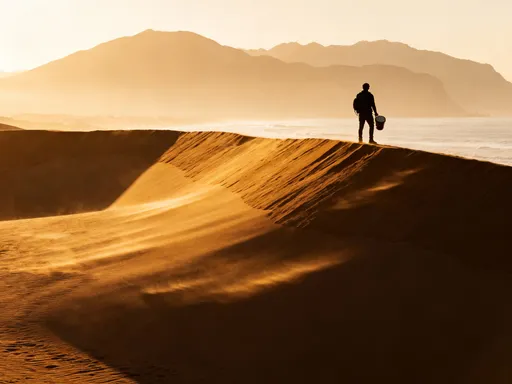
Other hidden gems include the upper Liesbeeck River, where the water slows and spreads into reed-lined pools, and the dry kloofs of the eastern slopes, where cracked earth and scattered boulders create a desert-like atmosphere. These are not destinations for casual exploration. Many require permits, guided access, or both. The reason is simple: these areas are ecologically sensitive, home to rare plants and animals, and vulnerable to erosion and invasive species. A single misplaced footstep can damage centuries-old lichen or disturb a nesting bird.
Yet for those who gain entry, the reward is solitude and depth. In these quiet places, the noise of the city fades, and the land speaks in a different tone—not of grandeur, but of subtlety. A geologist might marvel at the exposed rock layers; a botanist at the microhabitats in a shaded crevice; a hiker at the peace of walking where few have passed. These hidden valleys are not about conquest. They are about listening, observing, and moving with care. In a city often celebrated for its dramatic peaks and coasts, these quieter spaces offer a different kind of awe—one rooted in stillness and reverence.
Why Terrain Shapes Everything: Culture, Movement, Survival
The land of Cape Town is not a passive backdrop. It is an active force, shaping where people live, how they move, and what they grow. The mountains define neighborhoods—affluent areas cling to the slopes of the Atlantic Seaboard, while the flat expanse of the Cape Flats hosts a mix of townships, suburbs, and industrial zones. Commuting patterns are dictated by geography: the M3 and N2 highways follow ancient river valleys, while the lack of east-west routes across the mountain range creates congestion and isolation.
Agriculture, too, is bound by terrain. The fertile slopes of Constantia and Stellenbosch, sheltered from the wind and blessed with deep soils, have supported vineyards since the 17th century. In contrast, the sandy, nutrient-poor soils of the Flats limit large-scale farming but are ideal for certain crops like potatoes and vegetables grown in community gardens. Water management is a constant challenge—rainfall varies dramatically from the wet western slopes to the dry eastern plains, requiring complex systems of dams and pipelines.
Historically, the terrain influenced settlement patterns. The Khoisan people, the region’s original inhabitants, lived in harmony with the land, moving seasonally to follow food and water. European colonists built their first settlement at the foot of Table Mountain, drawn by fresh water from the springs and the natural harbor. Over time, the city expanded, but always within the confines of its geology. Today, urban planners grapple with the same constraints—how to grow sustainably within a landscape that resists easy modification.
And yet, this very resistance is what gives Cape Town its character. The wind that knocks you sideways on Signal Hill is the same that clears the air and cools the summers. The rocks that make construction difficult also create breathtaking views and natural protection. The fynbos that burns every few decades regenerates with greater diversity. The people of Cape Town have learned to adapt, to live not against the land, but with it. To walk this city is to understand that terrain is not just soil and stone—it is memory, identity, survival.
Cape Town’s terrain isn’t just scenery—it’s the soul of the place. To move through it is to engage in a constant dialogue with nature’s power. Whether you're hiking a ridge at dawn or simply standing still on a windswept bluff, the land speaks. Listen closely.